When grief outlasts everyone's patience
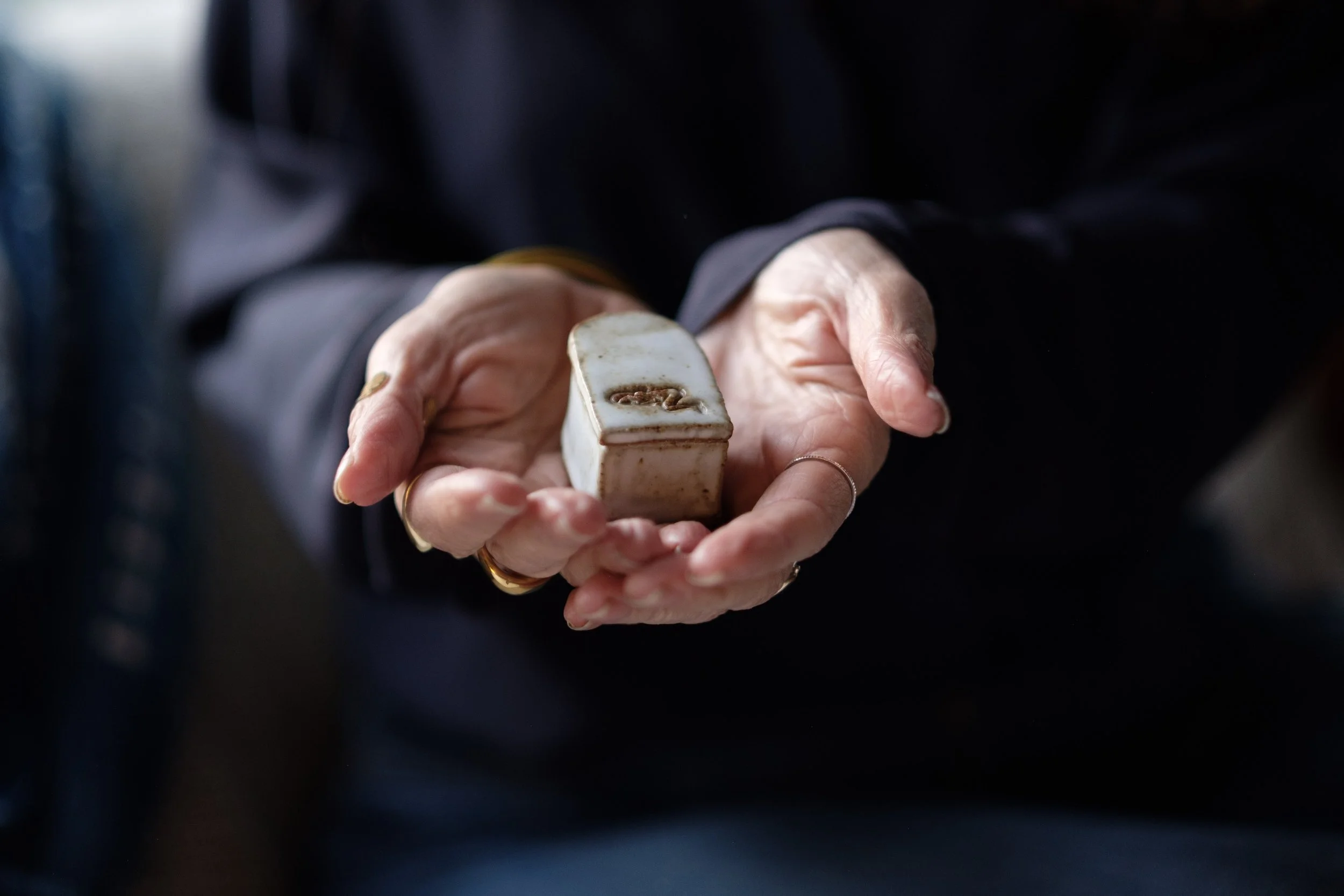
I make clay coffins as a tool for sympathetic magic. You write or draw what you’ve lost, put it inside, and let it go. Or, if letting go isn’t working, you use it to build internal boundaries around the grief. You don’t need one of my coffins to try this — a box and a shelf will do.
Three Reminders About Grief
1. Grief doesn’t go in a straight line.
“The pain of grief is just as much a part of life as the joy of love; it is, perhaps, the price we pay for love....” — Colin Murray Parkes, Bereavement: Studies of Grief in Adult Life
If you've lost someone dear or been through a hard breakup/divorce, the agony can feel endless. When you’re in the thick of it, you want a map through the maze. That’s what the theories try to give you. Kübler-Ross and Kessler map grief out in stages. These frameworks can be a real comfort when you're in the tsunami of grief, but if they aren't working for you, other ideas might.
George Bonanno's research challenges the stages — he found people don't move through fixed steps at all. Grief comes in waves, and what gets you through one wave might do nothing for the next one. He calls this coping ugly: there's no elegant, correct method. Whatever actually helps — distraction, travel, talking it out, a day spent under the covers — counts. The most important thing to adopt is flexibility: you try something, notice whether it helps, and change course when it stops working. You keep going. Keep trying new things. Draw your own map.
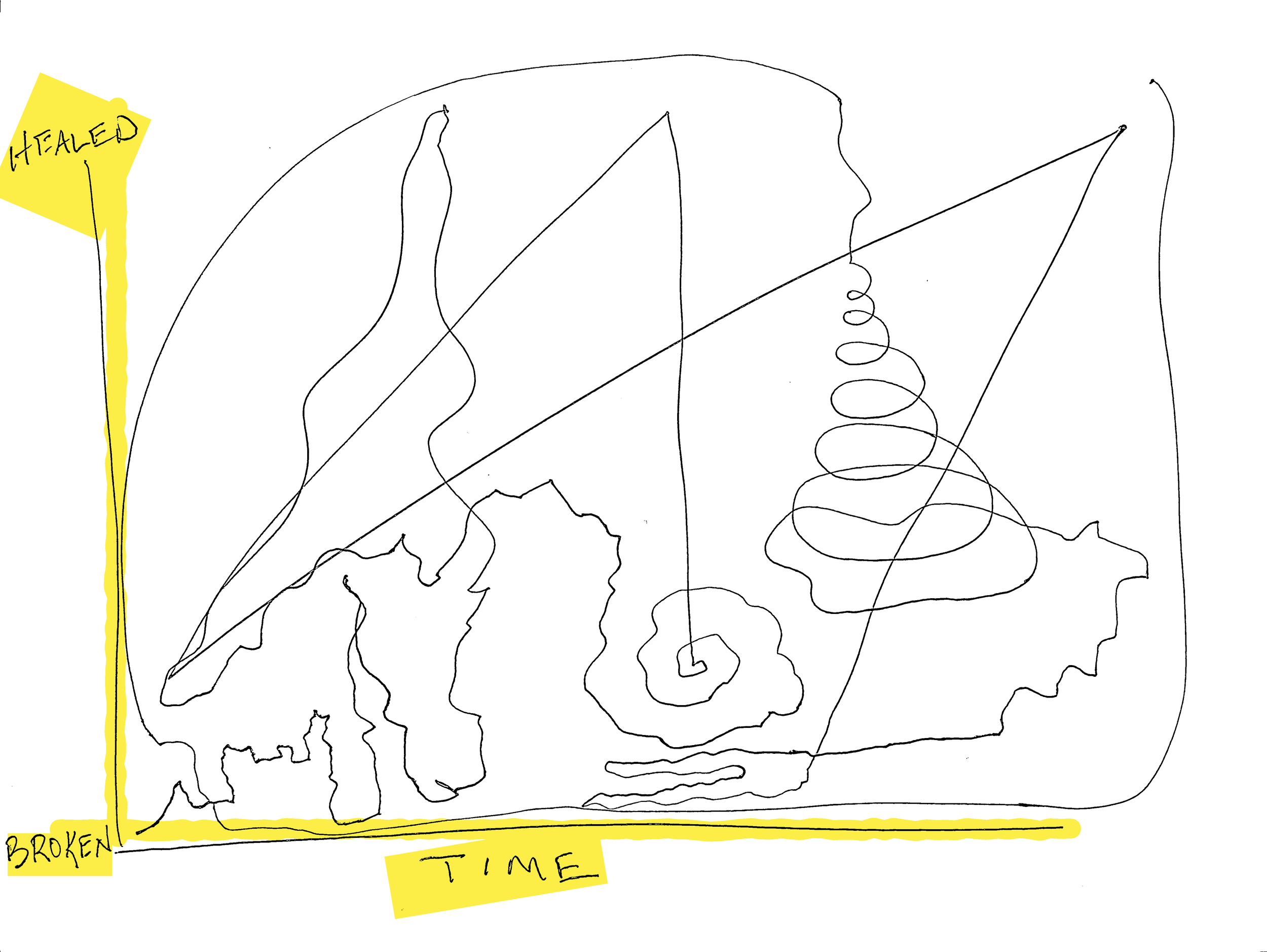
Sometimes the map is a clean line. Sometimes it’s a spiral. And sometimes the map looks like a scribble — you reach acceptance on Tuesday and wake up furious on Wednesday, or you find yourself looping for weeks, months, years, or decades. If someone is telling you you're taking too long, they're probably wrong. Don't stop sharing your pain with friends — stop sharing it with the ones who don't have the capacity for your timeline."
2. Schedule time to grieve.
“Nothing ever goes away until it has taught us what we need to know.” — Pema Chödrön
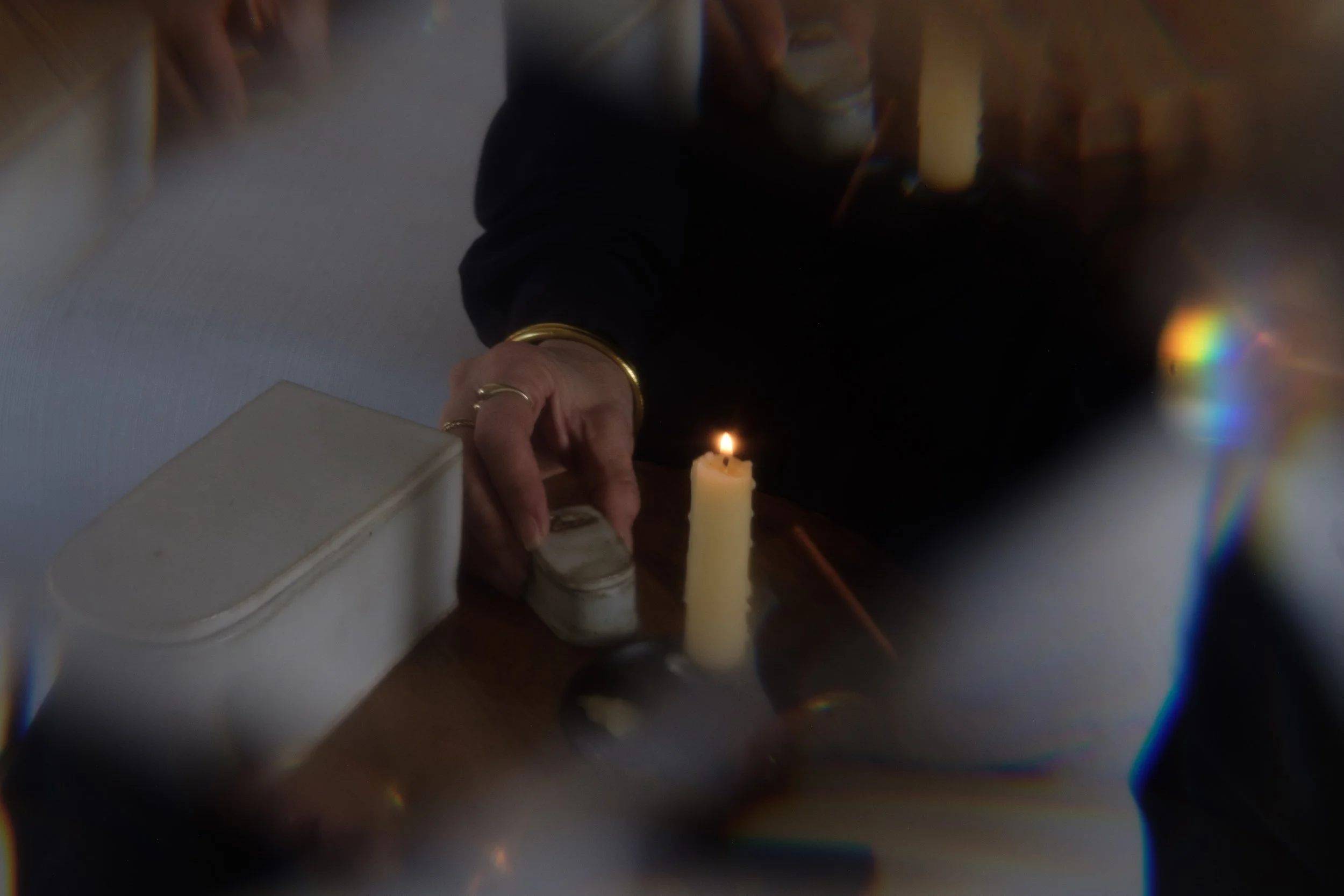
I first heard about the idea of scheduling time for active grieving from an amazing therapist named Alan Robarge. You put time to grieve on your calendar to really dive in; fall to your knees and wail. Allow it. Then, when the session ends, put it in a container, set it back on the shelf, and tell it, out loud and with love, that you'll be back later.
There’s real science under this: the Dual Process Model describes healthy grieving as oscillation, swinging between facing the loss and stepping back into ordinary life, with time off from grief built in. Active grieving is how you take that time off on purpose, so grief stops ambushing you mid-day at work or in the middle of a dinner party. This is one of the ways people use my coffins: a container you put it in, up and away on a shelf, so the grief stops being the boss of you.
3. The hardest grief often has no funeral.
“Bittersweetness is the recognition that light and dark, birth and death — bitter and sweet — are forever paired.” — Susan Cain, Bittersweet
Some grief arrives with a casket and a casserole. Some don’t. Mourning an ex who is still alive — especially when you share a child — is what researcher Pauline Boss named ambiguous loss: grief with no ending and no ritual to mark it.
And then there's the phase of grieving the grief itself. After a while, the grief becomes your last connection to what you lost, so loosening it feels like losing them again. The connection to the grief becomes the thing you're most afraid to loosen — and grief researchers have a reassuring name for keeping it: a continuing bond. You can carry grief and still be okay.
That’s the next turn of the spiral, and the far side of it is bittersweet. (Susan Cain — just interviewed by Sam Harris this past week — is an expert on bittersweetness. I like her ideas.)