
COUPLES THERAPY IN ECHO PARK AND ONLINE ACROSS CALIFORNIA
You love each other. You can't talk to each other.
That's the most common reason couples start therapy, and it's most of what I do. I combine the Gottman Method with an Imago-informed approach. Gottman shows us what's happening between you. Imago helps us see why. Then I teach you both how to change it.
Evenings. In person in Echo Park or online. Aetna accepted.
Why couples
come in
Researchers have asked couples why they start therapy, and the top answers barely change from study to study: they can't talk without it turning into a fight, and the warmth is gone. Here's how people say it, to me and to Google.
"We keep fighting about the same thing." Different costume, same fight.
"We feel like roommates." You run a household together. You can't remember the last real conversation.
"I push, and they shut down." The more one of you reaches, the more the other pulls away.
"Something broke the trust." An affair, a secret, a lie about money.
"I don't know if we should stay." Up to half of couples start therapy unsure the relationship should continue. You don't have to decide before you come in.
"Everything changed." A baby, a move, an illness, a job that swallowed one of you.
"The sex stopped." Or it never matched, and now nobody brings it up.
"We're getting married and want to get this right." See Before the Vows below.
Most couples wait two to three years after things get serious before they call. Earlier is easier. Later still works.


How I work
Here's what happens, in order, so neither of you walks in guessing.
1. I get to know you as a couple, and each of you alone.
One session together, then one individual session with each of you, plus questionnaires you fill out online. This is the Gottman assessment. It shows me your friendship, how you fight, and what you're building.
2. I tell you what I see.
In our fourth session I lay it out in plain language: your strengths (every couple has them), where you get stuck, and a plan we agree on.
3. We slow the conversation down.
From here you talk to each other, and I coach. One of you speaks, the other mirrors back what they heard, and nobody answers until the first person feels understood. It feels awkward for about ten minutes. Then it starts to work.
4. We catch it in the body.
Past about 100 beats per minute, you stop being able to hear your partner. Gottman calls it flooding. You'll learn to notice it early, take a real break, and come back.
5. You practice at home.
You leave every session with one small, specific thing to try before the next one. Small and repeated is what changes a relationship.
Gottman and Imago
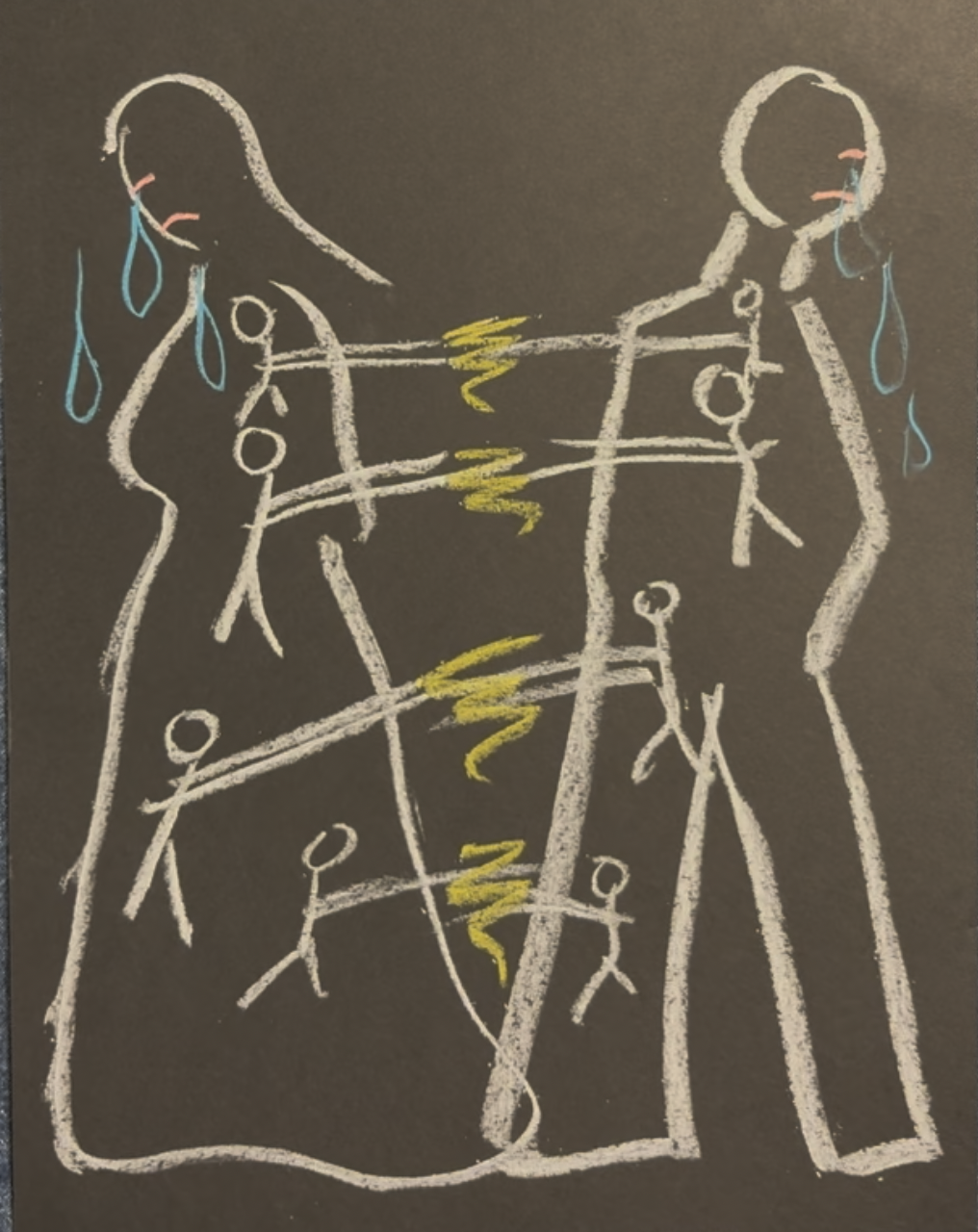
I use two approaches, and they do different jobs.
Gottman is the research.
In the 1980s John Gottman and Robert Levenson built a lab that looked like a studio apartment, wired couples to heart monitors, and asked them to argue. The Gottmans kept studying couples for decades after. What came out of it is a map of what predicts a relationship lasting and what predicts it ending, and a set of habits that replace the destructive ones. I use their assessment to see where you are, and their tools for conflict, friendship and repair.
Imago is the why.
Harville Hendrix and Helen LaKelly Hunt built it on an idea that sounds strange until you've lived it: we fall in love with people who feel familiar. Imago is Latin for image. Hendrix used it for the picture of love each of us forms as a kid from the people who raised us, the good parts and the painful ones. We go looking for that picture without knowing it. Part of us is hoping that this time, with this person, the old need finally gets met.
That's why the honeymoon ends. Sooner or later your partner hurts you in exactly the old place, and you're in what Imago calls the power struggle. Most couples take that as proof they chose wrong. Imago treats it as information. The fights point straight at what each of you most needs.
In the room, that looks like this:
Under every complaint is a wish. "You never ask about my day" usually means "I want to matter to you." We find the wish and turn it into a small, specific request your partner can say yes to.
You learn your pattern. Under stress, one of you probably pulls in (Imago calls this the turtle) and the other turns up the volume (the hailstorm). Each makes the other worse. The work is each of you stretching toward the other's way.
You talk to each other. In Imago Dialogue one of you speaks. The other mirrors back what they heard, says how it makes sense, and imagines what you feel. Then you switch. It's slow on purpose. Slow is what makes it safe enough to say the true thing.
Sometimes we go back. One of you speaks as your younger self, and your partner listens the way a parent could have and didn't. It's the part of Imago that reaches furthest back.
You drop the put-downs. Imago asks for zero negativity and daily appreciations. Gottman's research lands in the same place from the other direction.
An honest note: Gottman has decades of research behind it. Imago has much less, a handful of small studies with mostly short-term gains. I lean on Gottman for what the research says works, and I use Imago for what it opens up between two people. I came to Imago first as a client, so I know what it's like from the couch.
I've completed Level 1 and Level 2 Training in Gottman Method Couples Therapy, and I use Gottman Method Couples Therapy in my work. My couples work is also informed by Imago.

What couples
therapy asks
of you
Most couples arrive hoping I'll fix the other person. Here's what the work asks instead.
Each of you sets your own goals. I'll ask what kind of partner you want to be, along with what you want from the other person.
Most couples already know what they should do. The work is finding out what stops you.
You've each built a story about why your partner does what they do. Parts of it are probably wrong, and the hardest thing in the room is being willing to check.
Both of your versions can be true at the same time. We need both on the table.
You can't change your partner. You can change your half of the pattern, and when one of you moves differently, the other has to respond.
Trust gets built in small moments. Gottman found that couples who last turn toward each other's small bids for attention far more often than couples who split.
What bothers you most about your partner often points to an old hurt of your own.
Questions we'll work with
When your partner reaches for you, do you turn toward them, turn away, or push back?
What does your body do when a fight starts: lean in, freeze, or leave?
What would your partner say you're like to live with?
Under your position in your biggest fight, what hope or fear is hiding?
When your partner hurts you, who from earlier in your life does it remind you of?
The four habits that do the most damage
Gottman found four patterns that predict a relationship is in trouble. Each has a habit that replaces it, and we practice those.
Criticism, attacking who your partner is. Replace it with a gentle start: say what you feel and what you need.
Contempt, eye-rolling, sarcasm, mockery. In Gottman's studies it was the strongest single predictor of divorce. Replace it with a daily habit of saying what you appreciate.
Defensiveness, counterattacking or playing the victim. Replace it with owning your part, even a small part.
Stonewalling, shutting down and going silent. Replace it with noticing you're flooded and taking a real break of at least 20 minutes.
Bring Saturday's fight. We'll use it as an example of the pattern you two keep running. The goal is for you to handle the next one well without me in the room.
What it costs
One fee for the two of you, one session at a time. Engaged? Start with Before the Vows, my premarital program.
Couples Therapy
$200 a session for the two of you (one fee, not two)
Weekly or every other week, in person in Echo Park or online anywhere in California.
Aetna accepted
Evening appointments
First call free: 20 minutes, both of you welcome
Before the Vows
Premarital counseling for engaged couples. $1,050 for six sessions.
Most couples spend a year planning the wedding and almost no time planning the marriage. Before the Vows is six sessions aimed at the conversations that shape what comes after the party: money, sex, families, kids, how you fight, and what each of you thinks a marriage looks like on a Tuesday.
Wedding guests can give it as a gift.
About me
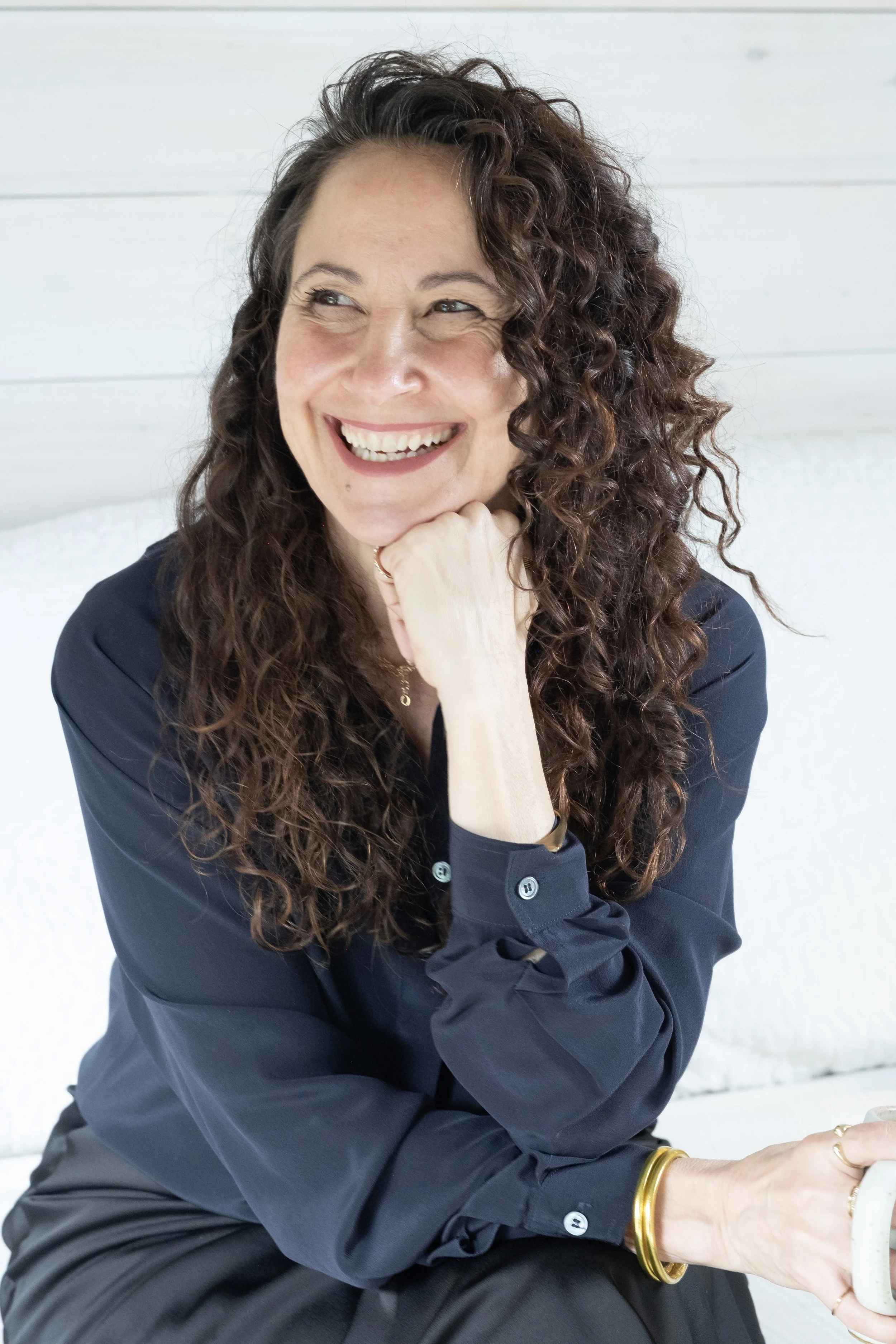
I'm Leda. I'm a Registered Associate Marriage and Family Therapist at Echo Park Creative Psychology, and couples are most of my practice.
I became a therapist later in life, on purpose. Before that I worked in the entertainment and advertising industries, so I know what pressure, public life and long hours do to two people trying to love each other. I trained as a doula at SF General and as a yoga teacher, so I pay attention to bodies as well as words.
I'm also an artist. I make objects for this work, like a pair of dice about attachment patterns, because sometimes a couple can see on a table what they can't see in each other. I want to understand the mind through science, so you won't find any woo-woo here.
In the room I'm direct, warm and a little playful. I'll tell you what I see. I won't take sides.
The details
If your partner isn't sure
I don't take sides. What we work on is the pattern between you. You each get equal time, and nobody gets ganged up on. You each also get a session alone with me early on, so you can say what's hard to say in front of the other person.
Send them this page. Or book the free call together and let them ask me anything.
Fees and logistics
$200 a session for the two of you (one fee, not two)
Before the Vows (premarital): $1,050 for six sessions
Aetna accepted
First call free: 20 minutes, both of you welcome
In person at 1555 Sunset Blvd in Echo Park, or online anywhere in California
Evening appointments
Your privacy
Everything we talk about is confidential. If your work or public life depends on discretion, tell me on the call and we'll plan around it: online or in person, how we communicate, and who knows you're coming.
Your questions, answered
-
$200 a session covers both of you. I'm in network with Aetna. If you have other insurance, ask me on the call about out-of-network options.
-
For a lot of couples, yes, and not for every couple. It works best when both of you show up, practice between sessions, and start before contempt has set in.
-
It can feel worse for a while, because you're finally saying the true things out loud. If it keeps getting worse, tell me, and we'll change course.
-
I can't answer that from here, and I'd be suspicious of anyone who could. The assessment gives us a real read on where you are, including what's still strong. That's where we start.
-
Yes. Up to half of couples who start therapy feel this way. Some decide to stay and rebuild. Some decide to separate with less damage, especially when there are kids. Both are good reasons to come.
-
Yes. You can start alone and work on your half of the pattern. Changing your half changes the whole thing more than most people expect.
-
No. Dating, living together, engaged, married, long distance. If you're a couple, you're welcome.
-
You each tell me what's going on and what you want. I ask about how you met, what's working, and where it hurts. You'll leave with a sense of how I work and what comes next.
-
The first four sessions get you an assessment and a plan. After that it depends on what you're working on. Some couples come for a few months, some longer.
-
A lot of couples say past therapy felt like talking in circles. Here you get a structured assessment, a clear plan in session four, and something specific to practice every week. If something isn't working, tell me, and we'll change it.
-
Often, yes. Rebuilding trust has a shape, and it takes time. We'll go at a pace both of you can stand.
-
No. I'll be honest with both of you, and sometimes that means saying things neither of you wants to hear.
Let's talk.
Twenty minutes, free, both of you welcome. You'll leave knowing whether I'm the right person and what the first month would look like.